
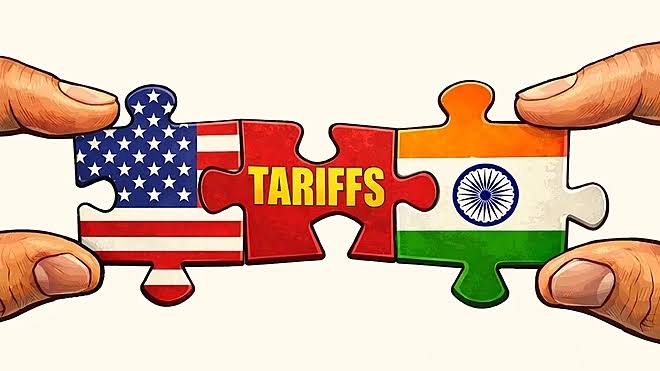
On February 2, U.S. President Donald Trump announced on Truth Social that the United States had reached a “trade deal” with India, under which reciprocal tariffs on Indian goods would be reduced from 25 percent (announced on July 31, 2025) to 18 percent. Trump said the decision was taken at Indian Prime Minister Narendra Modi’s “request” and described it as a gesture born of his “friendship and respect” for Modi. He further claimed that India had agreed to stop buying Russian oil, increase purchases from the United States and “potentially” Venezuela, eliminate all tariff and non-tariff barriers, and buy more than $500 billion worth of American goods across sectors such as energy, technology, and coal.
Also visit my youtube channel:- https://m.youtube.com/results?sp=mAEA&search_query=Regal+rajan
Modi later confirmed the conversation in a post on X, referring to Trump as a “dear friend.” However, his statement was notably narrower in scope, mentioning only that “Made in India” products would face a reduced tariff of 18 percent and expressing support for Trump’s efforts toward “global peace, stability and prosperity.” It made no reference to ending Russian oil imports or to eliminating tariffs on U.S. goods.
A day later, India’s Commerce Minister Piyush Goyal said that the final details of the agreement were still being “worked out,” adding that a joint statement would be released “shortly” once the remaining “technical details” were finalized. Echoing this, U.S. Trade Representative Jamieson Greer noted that the paperwork had yet to be completed, though he maintained that the “specifics and details” of the agreement had been defined. Citing government sources, the Indian news agency Asian News International (ANI) reported that the joint statement is expected to be issued “this week.”
While Goyal has sought to reassure domestic audiences that India’s sensitive sectors — particularly agriculture and dairy — remain protected, Greer said India had agreed to reduce tariffs on a “variety” of U.S. goods, including agricultural products. At a previous Senate Appropriations Committee hearing, Greer acknowledged the difficulty of accessing India’s tightly regulated farm sector, describing it as a “tough nut to crack,” but said India’s offers in the negotiations were the “best the U.S. has ever received.” U.S. Secretary of Agriculture Brooke Rollins also announced on social media that the deal would expand U.S. agricultural exports to India. Separately, Reuters reported, citing an anonymous government official, that India has agreed to partially open its agriculture sector under the agreement.
Other post
Adding to the uncertainty over whether a comprehensive trade deal has been concluded, India’s Commerce Secretary Rajesh Agrawal — formerly the chief negotiator for the India–U.S. Bilateral Trade Agreement — said at a public event shortly before Trump’s announcement that talks were “progressing well,” but cautioned that a broader bilateral trade agreement is complex and “will take time.”
Taken together, the statements suggest that India and the United States have reached a framework to address reciprocal tariffs. While this has been presented as a trade deal, it falls short of a full-fledged free trade agreement, which would resolve the deeper structural issues that have previously stalled negotiations.
What do you feel about this post?

Like

Love

Happy

Haha

Sad